Event 1
1786 Confinement of the Åkian Leaders
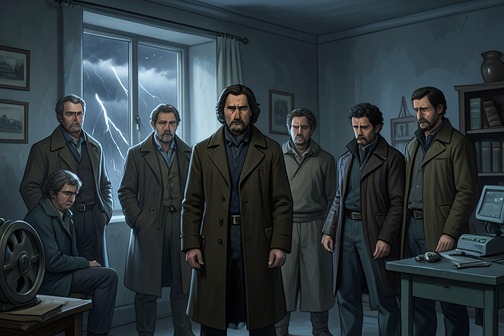
The [1786 Confinement of the Åkian Leaders](entity:event-recall-event-1786-confinement-of-the-2e6aca83e725) was the state’s coercive response to a dissenting religious community: after church warnings and civil proceedings failed to make them recant, [Åke Svensson](entity:character-recall-character-ke-svensson-95a97e31d724) and seven other leaders were sent to Danvik’s asylum. Four died there within two years. The episode supplies the remembered history of persecution behind the later Åkian revival, and makes the question of who may claim religious authority inseparable from the bodily cost of defying it.
## Background and Conflict
[Åkianism](entity:concept-recall-concept-kianism-59db6be26313) began in the neighboring parish of [Elmeboda](entity:location-recall-location-elmeboda-e8e38272456e) around 1780 and spread to Ljuder. Its adherents sought to imitate the early Christian church and return to the apostles’ way of life. They separated from the established church, rejected temporal and spiritual authorities within their community, and treated distinctions of property and social rank as contrary to [God](entity:character-recall-character-god-28f937b98b12)’s word. Their communal practice extended to worship and Holy Communion: no object was regarded as belonging to an individual.
The movement challenged a religious order built around instruction and enforced unity. The 1686 church law prescribed evangelical-Lutheran formation, while the royal Resolution and Order of January 12, 1726, was intended to protect parish life from teachings deemed dangerous and to preserve Christian unity. Against this background, the [Åkians](entity:character-recall-character-kians-49e6582c6c65)’ separate services and refusal to return to the established church were not treated as private differences of belief; they became a matter for both ecclesiastical discipline and civil authority.
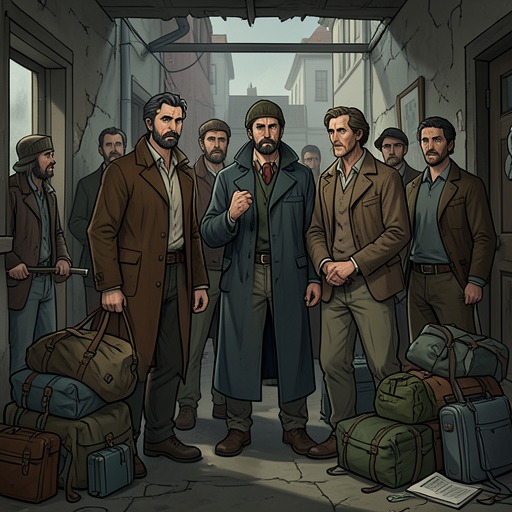
About forty people in Elmeboda and Ljuder had joined the sect. Many belonged to Åke Svensson’s extended family, spread across the two parishes. In Ljuder, the group’s center was [Kärragärde](entity:location-recall-location-k-rrag-rde-b145096283aa), the home of Åke’s brother-in-law, Andreas Månsson. The authorities’ action therefore fell on a community rooted in kinship and shared household life, not on isolated individuals alone.
## Proceedings and Confinement
The bishopric of Växiö summoned the Åkians for questioning and issued strong warnings. They remained inflexible and answered the church dignitaries with words described as unpropitious. The church pronounced its ban, but the dissenters retained their convictions. Civil proceedings followed: brought before [Konga County](entity:location-recall-location-konga-county-a30753dac7b2) Court in Ingelstad, Åke and his followers were admonished to obey the law and the regulations of the established church. They refused to recant or return to what the court regarded as the only true church.
The case was then reviewed by the Göta Crown Court. In the name of church peace and civil security, the court declared the sect members to have lost their sound minds and concluded that they should be confined in an asylum, ostensibly for both public order and the dissenters’ welfare. Its ruling turned religious nonconformity into a diagnosis and made confinement the remedy prescribed for it.
The eight people named in the order were handed over to the sheriff and transported to Danvik’s asylum in Stockholm in 1786. The court’s language promised that they would receive such care as their condition warranted. The subsequent outcome gives that official assurance a grim resonance: Åke Svensson, Andreas Månsson, and two other detainees died within two years. Åke was thirty-five at the time of his death.
## Aftermath and Historical Return
The other dissenters were gradually released and returned to their homes, officially described as cured. They lived quietly and harmoniously, and for years it seemed that the movement’s fire had been extinguished. But Åkianism reappeared in Ljuder in the 1840s. The earlier confinement thus becomes more than a closed episode in parish history: it is the precedent behind a later conflict, showing how an attempt to suppress a faith could silence its adherents for a time without erasing the beliefs that bound them together.
## Faith, Authority, and Suffering
The episode places competing claims to authority in direct opposition. The Åkians’ communal life and independent worship embodied their conviction that religious practice did not depend on the established church; the courts answered with ecclesiastical bans, civil admonition, and confinement. By describing the legal decision as both a defense of public peace and an act for the dissenters’ welfare, the account exposes how institutional power could present coercion as care.
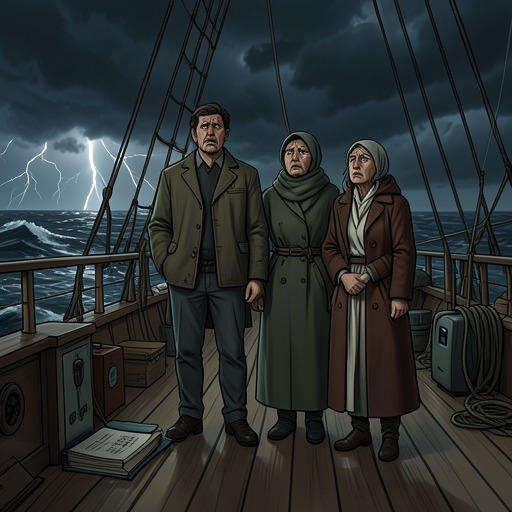
That history also informs the novel’s recurring tension between providence and human responsibility. Elsewhere, [Nils Jakob’s Son](entity:character-recall-character-nils-jakob-s-son-72020cafa7ea) accepts his crippling accident as preordained by God, and [Kristina](entity:character-recall-character-kristina-54ff8b4dbe07) interprets the chain of events in her life as divinely directed. Yet the memory of the Åkian leaders’ deaths complicates any easy assurance that suffering is simply part of a benevolent plan: the court’s declared purpose and the human consequences diverge. The story’s later religious scenes, including Danjel’s renewed practice and his appeal to Scripture during the storm at sea, inherit this unresolved question of how faith persists under pressure—and how human authorities can mistake dissent for illness.
Event 2
Nils Jakob’s Son’s Accident
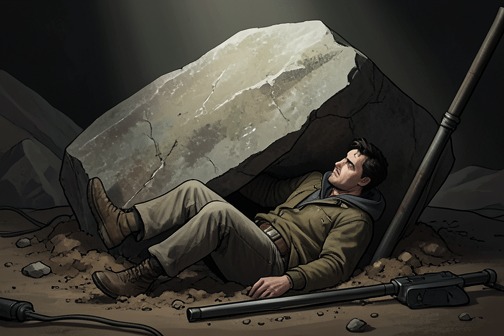
[Nils Jakob’s Son’s Accident](entity:event-recall-event-nils-jakob-s-son-s-acci-a02561421c56) is the 1844 injury that ended [Nils](entity:character-recall-character-nils-543bb1df6b2d)’s farming life and altered the course of the Nilsson family. While clearing land alone at [Korpamoen](entity:location-recall-location-korpamoen-2bf0268a6340), Nils was trapped beneath a stone; the damaged joint never recovered, and he could work only while seated. The accident forced the family to transfer the farm to Karl Oskar, turning a hard-won inheritance into both an opportunity and an obligation, and later echoed in the image of Nils and [Märta](entity:character-recall-character-m-rta-a753282f6317) left standing at the family home as their children departed for America.
## The Accident and Its Consequences
In the early spring of 1844, Nils was breaking new land in an outlying glade. The stone that stopped him was not unusually large, but its depth and rounded shape made it difficult to move with a bar or lever. After he had raised it partway, he wedged it with an iron bar and bent down to roll it aside. The ground gave way beneath him; the bar shifted, and the stone rolled back over his thigh. The accident arose in the work on which the family’s livelihood depended: clearing stones to make usable land.
When Nils failed to return for his afternoon meal, Märta went looking and found him beside the stone. She lifted him onto her back and carried him home. They sent for [Berta of Idemo](entity:character-recall-character-berta-of-idemo-dcaf248fd898), who treated local injuries and illnesses; she diagnosed a broken hipbone and an injured joint. Nils remained in bed for several months while Berta attended him with herbal preparations and salves. Though the bone healed and he could stand again, the joint injury remained incurable. He needed crutches to move and could perform household chores only with his hands, seated.
The change was final in its effect on his occupation. For twenty-five years Nils had fought the stones while expanding the small plot he and Märta first occupied. Now his farming life was over, and the land they had enlarged could no longer remain under his own management. The narrative gives the struggle a blunt reversal: in the last battle, the stones had won. The consequence was not simply personal incapacity; the family had to decide who could work and own the farm in his place.
## Korpamoen Passes to Karl Oskar
The family could not divide Korpamoen further: its one-sixteenth share of a homestead was already too small to split. Nils also refused to sell the land to an outsider, wanting one of his children to benefit from the years he had spent clearing it. Karl Oskar was still working as a farmhand in [Idemo](entity:location-recall-location-idemo-d548b1c39bc7) and only just of age; [Robert](entity:character-recall-character-robert-dcc9e88f1178) was eleven and Lydia fourteen. Despite Karl Oskar’s youth, Nils offered him the farm, partly because he had come to respect the determination of the son who had left home at fourteen after a dispute over hayrick slats. After seven years working for others, Karl Oskar was ready to buy and become master of the homestead.
The transfer preserved support for Nils and Märta through reserved rights. They were to have a room in the house, fodder for one cow and one sheep, land for their own sowing, use of the owner’s team, and an annual share of grain. The deed, entered into at Korpamoen in June 1844, bears the parents’ cross marks because they had never learned to write. Their children received inheritance shares, while the underage Robert and Lydia left theirs as claims against their brother. The arrangement made the accident’s economic consequence enduring: Karl Oskar gained the farm, but also accepted debts and the continuing responsibility to maintain his parents.
## An Injury Carried into the Emigration Story
Nils’s accident belongs to a broader family history of land divided among more people than it could comfortably sustain. By 1846, [Ljuder Parish](entity:location-recall-location-ljuder-parish-544654807d08) had 1,925 inhabitants, and the number of people without assessed property or permanent homes had grown markedly over the preceding century. The parish’s original holdings had been divided into many smaller farms. In that setting, Nils’s disability had consequences beyond the loss of his own work: it changed the household’s succession and left Karl Oskar to shoulder the farm’s costs and obligations.
Later, when the Nilsson family prepared to leave, the old clothes chest that had passed through generations became their [America chest](entity:object-recall-object-america-chest-93b6f7a8da06). They packed it with practical tools for work in the new country, including Karl Oskar’s disassembled muzzle-loader, as well as the family’s bedding, clothes, and food. The accident is not presented as the sole cause of emigration, but it forms part of the material history behind the family’s precarious inheritance: Korpamoen had been enlarged through Nils’s labor, yet its transfer left Karl Oskar with substantial debt and obligations to his parents. Migration promised a future in which work might improve the family’s prospects, especially for children who would otherwise have few choices beyond farm service or life as cottagers.
## The Farewell Image and the Accident’s Meaning
When the family finally departed, Karl Oskar looked back to see Nils and Märta standing together on the porch. Nils was stooped and leaning on his crutches; Märta stood beside him, upright. The contrast between the departing young and the stationary old makes the parents’ physical condition part of the scene of separation. Karl Oskar remembers them as rooted in place, like stones or tree trunks, and the image becomes fixed in his mind. The accident thus returns not through another account of the moment itself, but through its visible consequence: Nils’s dependence on crutches as he watches his children leave.
The event also gains resonance from the book’s repeated use of objects and labor. The stone that ended Nils’s ability to farm belongs to the same landscape that his years of clearing had made productive. The tools packed for the crossing represent the work the family expects to continue elsewhere, while the old chest carries domestic memory into that uncertain future. Nils’s injury links these meanings without resolving them: a life of labor made Korpamoen possible, but could not protect its maker from the land’s hazards or secure the next generation from debt. In the farewell scene, the family’s departure and the parents’ rootedness stand together as the accident’s lasting human consequence.
Event 3
Robert’s Attempted Escape from Service

[Robert’s Attempted Escape from Service](entity:event-recall-event-robert-s-attempted-esca-71efe1a9aca6) is [Robert Nilsson](entity:character-recall-character-robert-nilsson-9295ccb67dcd)’s first effort to evade the farmhand contract arranged by his father. On the May morning in [1848](entity:time-recall-time-1848-1462829c2222) when he is supposed to begin work at [Nybacken](entity:location-recall-location-nybacken-f89b0384187e), he turns aside at a mill brook, leaves clothing and shoes in the water to make others believe he has drowned, and takes the road to Åbro mill. The plan briefly gives material form to his desire for a life without a master, but it does not secure his freedom: the miller recognizes him, [Aron of Nybacken](entity:character-recall-character-aron-of-nybacken-c56e5eaa75bb) retrieves him, and [Robert](entity:character-recall-character-robert-dcc9e88f1178) is taken back to the farm. The episode’s central contrast is between the brook’s unowned movement and a servant’s legally restricted mobility.
## The Service Arranged for Robert
Robert’s attempt begins in a constrained position. Still a minor, he has been assigned by his father, [Nils](entity:character-recall-character-nils-543bb1df6b2d), to spend a year as a farmhand at Nybacken, about a mile from [Korpamoen](entity:location-recall-location-korpamoen-2bf0268a6340). Robert tells his parents that he does not want a master and asks whether he can avoid the service. They reject the appeal: the household cannot keep another dependent, his sister Lydia is already serving elsewhere, and Nils has accepted earnest money from Aron under the servant law. The arrangement is therefore not simply a choice of work but a binding obligation made on Robert’s behalf.
On the appointed morning Robert leaves home at sunrise carrying a woolen kerchief bundle of clothes and three books: the Bible, the [History of Nature](entity:object-recall-object-history-of-nature-af6885c9885b), and his mother’s prayerbook. The books are wrapped to protect them. Although spring has come, he feels no pleasure in the morning landscape; he dreads the service and resents being pushed out of the family home as a younger son without a portion. His departure turns an abstract dislike of having a master into a journey he does not want to complete.
## At the Brook and the Crossroads
Robert stops at the bridge over the mill brook and sits beside the water, delaying the start of his service. Watching the stream pass beneath the bridge, he imagines a freedom unavailable to a hired hand: the water belongs to no one, stays nowhere, and can flow all the way to the sea. The thought gives the scene its governing image. Land is divided into holdings, and those without land must serve landowners; the brook, by contrast, moves without contract or permission.
The place also holds a darker memory. In a deep pool near a large stone, Robert once drowned a cat; years earlier, a maid from Nybacken had slipped into the same pool and drowned while washing clothes. Robert remembers the marks her fingernails left on the stone as evidence of her terror. The memory brings death close to his thoughts of escape, but the scene does not present his plan as a genuine attempt to drown himself. Instead, he turns the brookside setting into a means of disappearing from the service expected of him.
Robert knows that the road divides at the bridge: the right-hand route leads to Nybacken, while the left leads to Åbro mill. He also knows of farmhands who vanished from the parish, including [Fredrik Emanuel Thron](entity:character-recall-character-fredrik-emanuel-thr-f08a5685190e), whose whereabouts had remained unknown for fifteen years. The possibility of taking a road away from Nybacken is thus connected to the parish’s record of people who leave and are never heard from again.
## Staging the Drowning
As Robert prepares to leave, one wooden shoe has floated out of reach and caught in the willows. Startled by its movement, he imagines himself in the water. He then deliberately makes the apparent accident more convincing: he stuffs his stockings into his remaining shoe and throws it into the brook, removes his jacket and lets it float after the shoe, and takes his two bundles with him. At the crossroads beyond the bridge, he turns left instead of taking the right-hand road to Nybacken.
The jacket remains caught in the willow branches, its sleeves moving as the water shifts them. To anyone passing, it suggests that the young farmhand on his way to Nybacken has drowned, like the maid before him. The abandoned garments make the deception legible to the village, while Robert’s actual route carries him away from the appointed service. His decision is an improvised escape rather than a prepared journey: he leaves with the possessions he can carry, and the plan depends on the appearance of his death.
## Recognition and Return
The escape lasts only until Robert reaches the mill. There, a farmer tells him that a farmhand on the way to service in Nybacken has drowned in the creek; the jacket has been found, but the body has not. The report shows how effectively Robert’s abandoned clothing has conveyed the intended story. The farmer also identifies the supposed victim as Nils of Korpamoen’s son, recently confirmed and remembered as a boy who used to run away from home.
The miller, however, recognizes Robert. He asks whether the barefoot boy without a jacket is Nils of Korpamoen’s son, and the intended disappearance ends. Aron arrives, speaks gently as though Robert has merely lost his way, grabs him by the shoulder, and orders him to collect his bundles. Robert is legally hired and bound to Aron; the physical return to Nybacken restores the obligation he had tried to escape. On the road back, the wagon takes the right-hand route at the same bridge where Robert had turned left.
The episode closes by naming the attempt as Robert’s first step on the road to America, even though he has not reached the sea or left the parish. The phrase casts the failed diversion as an early expression of a desire that will persist beyond this particular day. For now, however, the attempt ends with Robert returned to the service his parents arranged.
## What the Attempt Reveals
At Nybacken, Robert’s days are governed by work and by the demands of multiple masters. He tends the farm’s four horses, rises early, and is hurried or corrected by the people on the farm; even the animals claim his attention. The service year lasts 358 days, with only one free week. During his first week he decides that he must escape his human and animal masters. The attempted flight at the brook gives that resolve its first concrete action.
The return does not end the pattern of constraint. Later, after Aron strikes him for laziness, Robert does not complain. He understands the punishment as authorized by the servant law and by the religious doctrine of a master’s authority; he regards himself as having earned it. That later acceptance throws the first escape into sharper relief: Robert can imagine a way out, but the social and legal order teaches him to treat his subordination as legitimate.
The novel also revisits the episode’s contrast between land and sea. When Robert is eventually aboard ship, he compares a seaman’s confinement and dangerous work with farm service and concludes that a farmhand on land has more freedom than a sailor at sea. The early image of the brook flowing toward the sea therefore does not amount to a simple promise that every departure brings liberty. In the escape episode, water represents movement beyond ownership; later experience complicates that hope by showing that work and confinement can follow a person into a new setting.
Event 4
The 1848 Drought and Crop Failure at Korpamoen
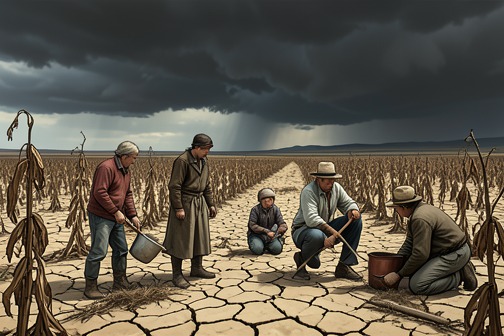
The [1848](entity:time-recall-time-1848-1462829c2222) drought and crop failure at [Korpamoen](entity:location-recall-location-korpamoen-2bf0268a6340) expose the fragility of a household whose hopes rest on work: Karl Oskar and [Kristina](entity:character-recall-character-kristina-54ff8b4dbe07) labor without respite, yet the weather destroys their hay and shrivels their grain. Their careful attempt to save every kernel cannot undo the shortfall. The crisis sharpens an existing economic trap—small property, debt, and obligations to the older generation—and helps turn emigration from an imagined possibility into a response to a future they cannot improve at home.
## Conditions and Setting
The drought comes amid long-standing pressure on land and livelihood in [Ljuder Parish](entity:location-recall-location-ljuder-parish-544654807d08). By 1846 the parish had 1,925 inhabitants, and its 43 original homesteads had been divided into 254 independent farms, most no larger than one-eighth of an original holding. The growing number of people dependent on land that had been repeatedly subdivided gives the weather’s failure consequences beyond a bad harvest: a household with little room to absorb losses has no secure reserve against scarcity.
At Korpamoen, Karl Oskar’s position is particularly exposed. He has taken over only one-sixteenth of a homestead, buying the farm with its cattle and equipment for 1,700 riksdaler, a price that includes an 800-riksdaler mortgage. His parents, [Nils](entity:character-recall-character-nils-543bb1df6b2d) and [Märta](entity:character-recall-character-m-rta-a753282f6317), retain rights to a room, fodder for a cow and a sheep, a plot for sowing, use of the team, and twelve bushels of grain a year. These arrangements sustain his parents but weigh heavily on the small farm. After three years, Karl Oskar and Kristina have worked to the limit of their ability and still have one fewer cow and seventy riksdaler more debt than when they began.
## The Season’s Failure
The summer begins under a punishing sky. June passes without rain; dry winds blow from the east and north, while the west wind that might bring rain never comes. Grass in the meadows turns coarse, the winter rye stops growing at knee height, grazing ends, and the cows go dry. Haying starts before June is over, because leaving the grass standing risks losing what little strength remains in it.
The harvest gives Karl Oskar and Kristina almost nothing to gather. The stems are so short and thin that the rake can barely catch them; he says the straws can almost be counted. His anger comes from the contrast with the previous year, when wet weather rotted hay in the swaths or washed it away. Now drought burns it up. As he works, the only moisture in his field is his own sweat, while the weather on which the harvest depends seems to make his labor vain.
The hay barn, already too small in good years, is not even half full. The drought continues, the well dries up, and the family must carry water from an old spring in the forest. Their thirsty cattle wait at the stile, lowing, while the fields lie scorched. In early August, birch leaves yellow and fall before the summer has had time to ripen into a full season. The rye, meanwhile, becomes overripe, its grains ready to drop from the heads, so even the act of reaping threatens to waste food.
## Salvaging the Rye
To save what little grain they can, Karl Oskar and Kristina take their quilted bedcover into the field and spread it beneath the scythe’s path. They move it along the stubble as they cut, catching kernels that would otherwise fall from the rye heads. Kristina also gathers broken heads from the ground and puts them in her apron. By evening, this painstaking recovery has yielded a tenth of a bushel of fallen rye—enough for only a few loaves.
The method cannot conceal the scale of the loss: the rye field produces only a third of its usual crop. The saved kernels are precious precisely because they are so few; the question hanging over the harvest is what a single loaf will count for when winter arrives. The bedcover itself carries the crisis into the household’s history. Four years earlier it had been [Kristina’s bridal cover](entity:object-recall-object-kristina-38720c81c6d8), used on her first night with Karl Oskar; now it serves as a tool for catching the bread on which the family depends. A keepsake associated with marriage and a new life has become part of the work of getting through a failed harvest.
## Work, Faith, and the Limits of Effort
The drought renews a conflict that had already emerged in the household’s worsening finances. Nils recalls the biblical promise that people will eat bread through the sweat of their brows; Karl Oskar answers that he is not sure work and sweat will even bring bread. The 1848 season makes that doubt concrete. He and Kristina have labored, but labor cannot command rain, restore the well, or fill the barn. Their loss is not simply the consequence of idleness or poor effort: the decisive conditions lie beyond their control.
That recognition does not immediately erase Karl Oskar’s religious scruples. When he later blames the Lord’s weather, he knows he has spoken rashly and feels remorse, conscious that [God](entity:character-recall-character-god-28f937b98b12)’s commandments should not be mocked. Yet the harvest exposes the strain between the teaching that work should sustain life and a reality in which weather can nullify the worker’s strength. The drought’s force lies in this mismatch: effort remains indispensable, but it cannot by itself guarantee the bread it is supposed to earn.
## From Crop Failure to Emigration
The poor harvest compounds a longer financial reversal. In 1847 Karl Oskar had already needed to borrow the full amount of his mortgage interest; after three years at Korpamoen, his family has a cow less and seventy riksdaler more debt. Later, after four years on the farm, he and Kristina are several hundred riksdaler poorer than when they began. They have spent their young strength in a place where work has not improved their prospects, and the drought gives that accumulated hardship its most visible form: a half-empty hay barn, a dry well, and a diminished rye crop.
When Karl Oskar argues for leaving, he sets the family’s prospects in [Sweden](entity:location-recall-location-sweden-0f697902ba54) against the possibility of fertile, stone-free land in [North America](entity:location-recall-location-north-america-fcff35f9a912), where he believes hard work might improve their lot. He also fears what the children’s future would be if they stayed: only one could inherit the farm, while the others would have to become farm servants or squatters in a parish already crowded with people competing for work and shelter. The drought does not alone cause the family’s decision to emigrate, but it makes unmistakable the vulnerability on which that decision rests. In a landscape where the harvest depends on weather and the land is divided into ever smaller holdings, even strenuous work cannot promise security for the next generation.
Event 5
Robert and Arvid’s Emigration Plan
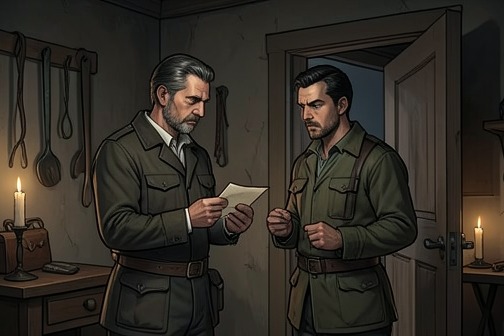
[Robert and Arvid’s Emigration Plan](entity:event-recall-event-robert-and-arvid-s-emig-134df1149784) is a secret agreement between two farmhands to leave service in [Sweden](entity:location-recall-location-sweden-0f697902ba54) and seek a new life in [North America](entity:location-recall-location-north-america-fcff35f9a912). It turns [Robert](entity:character-recall-character-robert-dcc9e88f1178)’s escape from [Nybacken](entity:location-recall-location-nybacken-f89b0384187e) into a shared undertaking: [Arvid](entity:character-recall-character-arvid-4d9f6d742219) sees the ocean crossing as a chance to shed the name and disgrace imposed on him locally, while Robert brings the route, timing, and money that make departure seem possible. The plan’s promise is inseparable from its limits: one boy has an inheritance, the other no savings, and neither has firsthand knowledge of the country they imagine as a refuge.
## The impulse to leave
Robert’s proposal grows from what he has learned about Arvid’s distress. Arvid cannot bear being called the Bull of Nybacken, and Robert concludes that a person subjected to such treatment cannot remain in the neighborhood. That recognition changes their friendship into an obligation: Robert decides he must confide in him.
He chooses a moment when they are alone in the stable room, though he behaves as if [Sheriff Lönnegren](entity:character-recall-character-sheriff-l-nnegren-6c9cb6efdb38) might be listening outside. In whispers, Robert tells Arvid that he carries a heavy secret and asks whether he can rely on him. Arvid promises to keep it even at the cost of his head. The secrecy is not merely theatrical. Robert is proposing an escape from the service that binds him to [Aron of Nybacken](entity:character-recall-character-aron-of-nybacken-c56e5eaa75bb), and the plan depends on trust between the two young men.
Their reasons for leaving are distinct. Robert has already been changed by his earlier experience of service and by his interest in books and information; Arvid’s immediate motive is to get beyond a community where the rumor surrounding the alleged deed with the white heifer has made him an object of ridicule and avoidance. The plan belongs to a wider movement in which crop failure, religious persecution, dissent, personal troubles, ostracism, and unfair employment practices push different people from Ljuder parish toward emigration. For these two, however, the departure first takes shape as a private answer to service and social disgrace.
## Robert’s route and calculation
Robert does not propose an open departure from Nybacken. He intends to wait until fall, when Aron’s farm sends oak timbers to [Karlshamn](entity:location-recall-location-karlshamn-4c92bb98196e). By then Robert can drive; he expects to join the timbermen and take Aron’s old mare. Once Aron has let the driver out of sight, Robert plans to keep going. The mare, he reckons, will return to Nybacken alone, while he makes for the harbor and a ship bound for North America.
The scheme converts the master’s own transport into Robert’s means of escape. Rather than first finding money for a separate journey to the coast, he would use the timber delivery to reach Karlshamn. There, he expects to arrange passage with a captain. The plan depends on timing, distance, and concealment, and Robert presents each as something that can be managed; its daring is clearest to Arvid, who sees a fifteen-year-old boy plotting to disappear with his master’s timber load and cross an ocean.
Robert’s proposal also carries an invitation: Arvid can leave behind the name Bull. At first Arvid is too surprised to answer. But when he considers the prospect of America, the motive becomes concrete. No one there would know the rumor or call him the Bull behind his back; he imagines being able to meet people’s eyes freely and to be respected like other men. He agrees at once, and the two shake hands. Their compact turns an individual flight into a joint crossing.
## The price of passage
The practical obstacle emerges as soon as they discuss the fare. Robert knows the cost from what he has read: transport from Sweden to [New York](entity:location-recall-location-new-york-f84f7f10ee10), including provisions, firewood, and fresh water, costs 150 riksdaler for an adult. An additional ten riksdaler is charged as an entrance fee, and other expenses bring the estimated sum required for each emigrant to about 200 riksdaler.
Robert has that amount in reach: his inheritance remains with his brother in [Korpamoen](entity:location-recall-location-korpamoen-2bf0268a6340). Arvid, by contrast, has not saved a shilling. Two hundred riksdaler equals five years of wages; even if he saved every penny and gave up snuff, he would have to remain in service at Nybacken for five more years. The difference exposes the unevenness beneath their handshake. The same destination is imaginable to both, but only one has the resources to act on the plan immediately.
The money is also part of a larger question of capability. The young men have a route in mind and, eventually, a ship to seek, but their information about America comes through books, reports, and rumor rather than personal experience. For the larger household migration, [Kristina](entity:character-recall-character-kristina-54ff8b4dbe07) gives voice to this uncertainty: there is no deed guaranteeing land, no promise from American authorities, and no trusted traveler they know who can verify what the printed accounts claim. Robert’s confidence in the plan is practical rather than proof that its expectations are secure.
## From secret pact to group journey
The private escape Robert and Arvid imagined does not unfold exactly as planned. When emigration becomes a collective undertaking, the two meet the other travelers at Åkerby Junction. Arvid rides with [Jonas Petter of Hästebäck](entity:character-recall-character-jonas-petter-of-h-s-ac5687d345da), and Robert moves from the crowded wagon of his family to a seat beside [Jonas Petter](entity:character-recall-character-jonas-petter-f5942c89f0ae) and [Elin](entity:character-recall-character-elin-8ce326a51032). The farmhands who had meant to slip away alone on a timber load are now traveling openly among a much larger party.
There are nineteen people at the junction, including three drivers who will return from Karlshamn; sixteen are emigrants, nine adults and seven children. The group includes Danjel’s household, [Ulrika of Västergöhl](entity:character-recall-character-ulrika-of-v-sterg-h-888674962a92) and Elin, Jonas Petter, the Nilsson family, Robert, and Arvid. Jonas Petter calls them a suitably large family and asks who should lead it. The scene broadens the plan without erasing its original bond: Robert and Arvid’s agreement becomes one strand in a migration assembled from several households and individual crises.
The destination now has a definite maritime form. Karl Oskar and Robert have secured passage on the [Charlotta](entity:object-recall-object-charlotta-f5112ad4fa04), a merchant brig sailing from Karlshamn to New York, and Robert offers to obtain a contract for Danjel if the ship has room. The vessel leaves on [April 14, 1850](entity:time-recall-time-1850-4-14-07027ae25b81), carrying 78 emigrants alongside its crew of fifteen. Robert and Arvid’s first conception of an ocean crossing has thus entered a real collective departure, though the crossing brings conditions they could not resolve by planning alone.
## Promise and consequence
The America Arvid imagines is chiefly a place beyond the reach of the local judgment that has defined him. Robert’s plan offers more than geographical movement: it promises that a reputation need not follow a person everywhere. For Robert, meanwhile, emigration is a way to break from the service relationship through a calculated use of its own machinery. Their joined decision links economic constraint to social injury, while showing that leaving requires both a desire to go and the means to make the journey.
The wider story tests the confidence that accompanies departure. Aboard the Charlotta, the emigrants endure cramped, poorly aired quarters, illness, storms, and prolonged confinement. By the time land appears, scurvy and ship fever have weakened them, and the voyage has depressed many passengers. The sight of green earth revives their energy, but it does not retroactively guarantee the hopes that first drew them west. The plan’s decisive achievement is narrower and more concrete: two young farmhands who could not imagine a tolerable future in their old circumstances set out together, and their secret pact becomes part of a group crossing whose hardships reveal the cost of turning aspiration into movement.
Event 6
Danjel Andreasson’s Revival of Åkianism
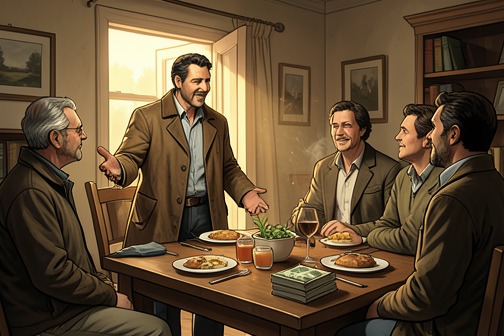
[Danjel Andreasson’s Revival of Åkianism](entity:event-recall-event-danjel-andreasson-s-rev-09430e4422fe) is the return of a once-suppressed religious dissent to everyday life at [Kärragärde](entity:location-recall-location-k-rrag-rde-b145096283aa). It takes visible form not only in belief but in changed household and lending practices: Danjel welcomes the poor and socially excluded into his home and renounces interest on money he has lent. These actions make the revival a challenge to the parish’s established moral and social order, as well as a source of bewilderment to his relatives and neighbors.
## Background and Material Strain
The revival unfolds in a community where poverty was formally classified and relief tightly regulated. The parish council divided people in need into three groups: those wholly incapacitated could receive up to three riksdaler and four bushels of barley a year; those partly able to work received smaller sums and at most two bushels; temporary aid came from the [Ljuder Parish](entity:location-recall-location-ljuder-parish-544654807d08) Poor Purse. The council also placed people it judged profligate or lazy in this last category and prescribed minimal assistance as a lesson in sobriety and industry. Danjel’s household would bring together people whom such classifications marked as dependent, disreputable, or beyond ordinary acceptance.
Economic obligation was already personal and pressing for [Karl Oskar Nilsson](entity:character-recall-character-karl-oskar-nilsson-980a124ddd48). When he took over [Korpamoen](entity:location-recall-location-korpamoen-2bf0268a6340) in 1844, its agreed price, including cattle and equipment, was 1,700 riksdaler, with an 800-riksdaler mortgage. His parents, [Nils](entity:character-recall-character-nils-543bb1df6b2d) and [Märta](entity:character-recall-character-m-rta-a753282f6317), retained lifetime rights to a room, provisions for a cow and sheep, a plot for sowing, use of the farm team, and twelve bushels of grain annually. Those provisions were their security in old age, but they also burdened a small farm already carrying debt. By 1847 Karl Oskar had to borrow to meet the mortgage interest; Danjel then lent him fifty riksdaler.
The strain continued despite work. After three years at Korpamoen, Karl Oskar and [Kristina](entity:character-recall-character-kristina-54ff8b4dbe07) had one fewer cow and seventy riksdaler more debt than when they began. Their experience sharpened the question of whether hard work alone could secure subsistence. Against this background, Danjel’s later refusal to take interest is not an abstract doctrine: it changes the terms of a loan that had helped keep the farm afloat.
## A Household Opened to the Excluded
Karl Oskar first encounters the change at Danjel’s home. The house is full of paupers and outsiders, with strangers seated at table alongside the household. Among them are Severius Pihl, a dishonorably discharged soldier known as a fighter and drunkard; Sissa Svensdotter, a disabled maid who has fallen into poverty and dependence on parish relief; and [Ulrika of Västergöhl](entity:character-recall-character-ulrika-of-v-sterg-h-888674962a92), accompanied by her illegitimate daughter. Karl Oskar initially supposes that the beggars have merely arrived at the farm together. Danjel tells him instead that they will now live there, and [Inga-Lena](entity:character-recall-character-inga-lena-f3e1a0ee001f) confirms that they all share the house.
The decision turns hospitality into a reorganization of domestic life. People treated as separate cases of poverty or scandal become members of one household. The scene also exposes the distance between parish categories and Danjel’s practice: those whom official relief ranks, judges, or supports only minimally are received at Kärragärde as people with a place at the table. The evidence does not present the revival as a formal institution with a detailed structure; it shows its force through this concrete inclusion.
## The Loan and the Spread of Rumor
When Karl Oskar later discusses the fifty-riksdaler loan, he reports that Danjel no longer wants interest. Asked whether the new loan should be handled as before, Danjel says he does not desire interest on the money. When Karl Oskar asks for more time to pay interest on the older debt, Danjel says he will never again accept interest on loaned money, repeating the decision for clarity. The altered practice reaches backward to an existing obligation as well as forward to new lending.
Kristina hears the account and recognizes that something serious has happened to her uncle; Karl Oskar guesses that Danjel may have suffered a mental disturbance. Their uncertainty registers the shock of a transformation they cannot yet explain. Within days, however, the change has acquired a public religious meaning. Rumors pass from house to house and village to village that the heresy of [Åke Svensson](entity:character-recall-character-ke-svensson-95a97e31d724)—supposedly dead since its founder’s time more than fifty years earlier—has been revived by his sister’s son at Kärragärde.
## Significance
The revival joins dissent in belief to dissent in the handling of need and debt. Its social expression is unusually tangible: a crowded home and a refusal to make lending yield interest. In a parish where poor relief distinguishes deserving from supposedly profligate recipients, Danjel’s welcome crosses the boundaries by which poverty is administered and moralized. In a farming economy where mortgage interest and family maintenance press heavily on smallholders, his decision also challenges the ordinary terms of obligation.
The episode is first seen through Karl Oskar’s report to Kristina, so its meaning arrives in stages: an unexpected household, an altered loan, a relative’s alarm, and finally a rumor that names the change as Åkian heresy. That progression makes the revival both intimate and public. It begins inside one family’s dealings and one farm’s household, then becomes a threat—or promise—to the wider parish order.
Event 7
The 1850 Ljuder Emigration
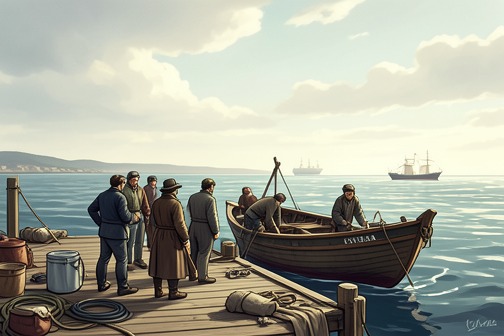
[The 1850 Ljuder Emigration](entity:event-recall-event-the-1850-ljuder-emigrat-fc385f3fcc32) is the departure of a varied group of people from [Ljuder Parish](entity:location-recall-location-ljuder-parish-544654807d08) for [North America](entity:location-recall-location-north-america-fcff35f9a912), a collective movement assembled from private crises rather than a single shared cause. The emigrants sought escape from poverty, debt, religious and civil pressure, constrained work, and unsettled personal lives; they left with only uncertain knowledge of their destination, and the long crossing turned the promise of freedom into a test of endurance.
## Background and Motives
The group left Ljuder Parish, in [Småland](entity:location-recall-location-sm-land-46376353f687), in [1850](entity:time-recall-time-1850-9a898eaa53b5), during the period when group migration was the most common form of Swedish emigration. Such groups typically numbered from fifteen to two hundred people and often set out to establish farming or religious settlements. The novel’s emigrants are not united by one motive: crop failure, persecution by civil authorities, religious dissent, personal problems, social ostracism, and unfair employment practices all contribute to the decision to leave. Their shared route therefore gathers separate forms of dissatisfaction into one movement.
The departure emerges against the slow disturbance of rural communities that had long depended on inherited routines and the soil. News and rumors of fertile land across the ocean passed from neighbor to neighbor, while pictures and printed accounts offered possibilities no one in the emigrants’ home community could verify from personal experience. The new country promised tillable soil and greater freedom to people with little land, mounting debts, or few prospects; for others, emigration meant leaving entanglements at home rather than pursuing a guaranteed reward. The ocean and the destination remained unknown, and the choice divided the cautious from those willing to risk the journey.
## Household Decisions and Practical Arrangements
For [Karl Oskar Nilsson](entity:character-recall-character-karl-oskar-nilsson-980a124ddd48), the decision followed years of worsening circumstances at [Korpamoen](entity:location-recall-location-korpamoen-2bf0268a6340). After four years of work, he and [Kristina](entity:character-recall-character-kristina-54ff8b4dbe07) were several hundred riksdaler poorer than when they began. He feared that staying would consume their strength without improving their position, leaving them to spend old age in the reserved room with meager bread, as his crippled father and mother did. His argument for departure arose from the prospect of continued labor without a meaningful return.
Kristina did not share his confidence in America. She worried that the attractive reports might prove a wild-goose chase: no authority in the [United States](entity:location-recall-location-5d55e9152db1) had promised the family land, Karl Oskar had no deed awaiting him, and they knew no farmer with wife and children who had already made the journey and could describe the country. She distrusted the newspapers and books on which his hopes rested. Their decision thus required more than agreement about hardship; it required Kristina to face the risk that the destination might not match the picture her husband had formed.
The plans acquired a timetable and a price. Karl Oskar and [Robert Nilsson](entity:character-recall-character-robert-nilsson-9295ccb67dcd) wrote to a firm in [Karlshamn](entity:location-recall-location-karlshamn-4c92bb98196e) and secured a promise of passage aboard the merchant vessel [Charlotta](entity:object-recall-object-charlotta-f5112ad4fa04). They sent a down payment of one hundred daler for six passengers and expected to embark around the second week of April, sailing directly to [New York](entity:location-recall-location-new-york-f84f7f10ee10). Spring offered a practical advantage: the winter storms would have passed, and an early arrival would leave time to till and sow before the fall harvest. Karl Oskar also offered to obtain a passage contract for [Danjel Andreasson](entity:character-recall-character-danjel-andreasson-7cad16c864f5) if the ship had room. Danjel planned to bring nine people from [Kärragärde](entity:location-recall-location-k-rrag-rde-b145096283aa), including children and household members.
The cost of leaving narrowed the family’s prospects even as it enabled the journey. After selling Korpamoen and its contents, and after the mortgage and other debts were deducted, about 1,200 daler remained. Passage for the family—three adults and three children—cost 675 daler, leaving Karl Oskar with about 500 daler before the American entrance fee and onward transport to an unknown settlement. He hoped to obtain land almost free, but little money would remain for livestock and farm tools. To protect their last security, Kristina sewed the 500 daler into a sheepskin bag that Karl Oskar could fasten to his belt and carry against his body.
## The Emigrant Party Sets Out
The travelers converged at Åkerby Junction. Danjel came from Kärragärde with his wife, four children, and [Ulrika of Västergöhl](entity:character-recall-character-ulrika-of-v-sterg-h-888674962a92), riding in a hired team from [Kråkesjö](entity:location-recall-location-kr-kesj-b2facea6cc12). [Jonas Petter of Hästebäck](entity:character-recall-character-jonas-petter-of-h-s-ac5687d345da) drove his own one-horse wagon with a hired man, who was to take the horse back from Karlshamn. [Arvid](entity:character-recall-character-arvid-4d9f6d742219) and [Elin](entity:character-recall-character-elin-8ce326a51032), unable to fit on Danjel’s wagon, traveled with [Jonas Petter](entity:character-recall-character-jonas-petter-f5942c89f0ae). [Robert](entity:character-recall-character-robert-dcc9e88f1178) moved from the heavily laden Korpamoen wagon and found a place beside Elin; Arvid welcomed him with a broad grin. The two farmhands from [Nybacken](entity:location-recall-location-nybacken-f89b0384187e), once imagined as escaping secretly and alone, were now journeying together in a visible group.
Nineteen people met at the junction: three drivers who would return from Karlshamn and sixteen emigrants, nine adults and seven children. Jonas Petter remarked that they made a suitably large family and raised the question of who should lead it. The attention turned to Karl Oskar, who demurred because he was the youngest of the three farmers; he addressed Jonas Petter as the oldest. The gathering made the migration’s social structure visible: separate households had been linked by transport, kinship, employment, and shared plans, but the party had not become a single family in any simple sense.
The road itself sharpened the meaning of departure. As the wagons passed familiar places, Karl Oskar and Kristina looked at them in silence: a brook where they had swum, a meadow where they would no longer see spring lilies. The journey began not only as movement toward a new country but as a last passage through the landscape of their youth. Along the route, Robert counted openings in winter pasture fences as gates on the road to America, even where the gates had been removed; had departure been delayed a month, he thought, those openings too would have been closed.
## Passage and Arrival
The emigrants’ expectation of a new start collided with the material reality of the sea voyage. The prolonged crossing brought storms, illness, suffering, and confinement aboard ship. Scurvy and ship’s fever weakened the passengers; monotonous days left them depressed, downhearted, and in some cases indifferent to what life might bring. Their arrival was not simply the fulfillment of a plan: it followed a passage that had worn down their bodies and spirits.
When America became visible, passengers gathered on deck, carrying those too weak to climb by themselves. The shore first presented houses, churches, embankments, piers, roads, people, and carriages, but the emigrants searched for something else. They found it in a grove of leafy trees and grass on a point of land: green earth, set against the dark shore they had left at Karlshamn. The sight confirmed that the sea had been crossed and that land lay before them again.
The vision changed the passengers’ condition without erasing the suffering that preceded it. Crowded together on deck, they were compared to cattle confined in narrow stalls through winter and turning toward a doorway at the scent of spring. At the sight of living ground, a new energy and ambition seized them: the sick felt they might recover, the weakened came to life, and initiative and boldness returned to those who had been exhausted or afraid. The arrival thus closes the crossing with renewed possibility, not with proof that the emigrants’ hopes of land, security, or freedom will be fulfilled.
Event 8
当局镇压 Kärragärde 的 Åkian 信徒
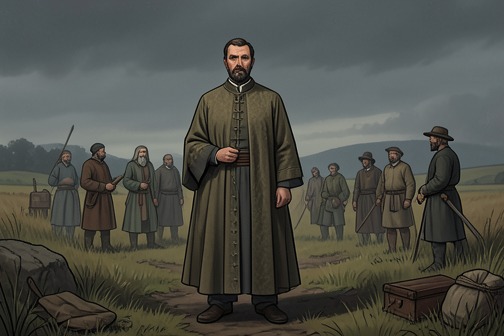
The suppression of the Åkian dissenters at [Kärragärde](entity:location-recall-location-k-rrag-rde-b145096283aa) is a confrontation between household religious practice and the institutions claiming authority over worship. [Danjel Andreasson](entity:character-recall-character-danjel-andreasson-7cad16c864f5)’s followers understand their private Communion as an expression of redemption and Christ’s presence; [Dean Brusander](entity:character-recall-character-dean-brusander-3d085a7b0b0d) regards the same acts as a violation of church order. Warnings and exclusion from the sacraments give way to a nighttime intervention, prosecution, fines, and imprisonment. The result is not simply a legal punishment: the dissenting community is broken up, while a few members remain with Danjel.
## Background: A Faith Practised at Home
The dispute takes place within a religious order shaped by the Church Law of 1686 and the royal Resolution and Order of January 12, 1726, which sought to maintain Christian unity in teaching. Against that established framework, Danjel resumes the teachings of [Åke Svensson](entity:character-recall-character-ke-svensson-95a97e31d724) after his religious conversion. He gives Bible talks to his household on Sundays, welcomes neighbors who happen to visit, prays while working, and attends church for Holy Communion. His religious life is therefore not confined to an occasional gathering: it organizes his household conduct and his everyday work.
Danjel’s renewed faith also changes how he treats property and people in need. He stops making and serving brännvin, gives up profane speech, and considers his possessions gifts from [God](entity:character-recall-character-god-28f937b98b12) that should be shared with poorer brethren. Kärragärde becomes a home for people who are helpless or rejected by the parish, including two people known for misconduct. This generosity wins some neighbors’ approval, but it does not settle the question of religious authority. For Brusander, Danjel’s teaching and independent gatherings threaten the church’s exclusive right to administer the sacraments.
## Warnings and the Church Ban
Brusander first tries to prevent the dissent from spreading without resorting to secular authorities. For three Sundays in succession he reads from the pulpit the ordinance against private religious meetings, warning that violators may face fines, prison, or exile. He also names Kärragärde as a forbidden meeting place. When reports say Danjel continues his Bible explanations, the dean imposes a church ban: Danjel and his household are excluded from Communion and from the fellowship of the church.
The ban does not end the meetings. In February, churchwarden [Per Persson](entity:character-recall-character-per-persson-192eebcfce2e) reports that Danjel is gathering his household and neighbors behind locked doors at night and administering Communion. Persson and other witnesses have seen people around a Communion table; the dean is also told that Danjel has arranged for several gallons of Communion wine to be sent from [Karlshamn](entity:location-recall-location-karlshamn-4c92bb98196e). Brusander interprets these acts as more than private devotion: in his view, Danjel has moved from Bible teaching to establishing his own congregation and conducting church rites without authorization.
Persson reports that some hot-tempered parishioners want to drive Danjel’s followers out by force. He considers that course ill-advised, and Brusander likewise insists that legal means must be used. Their decision to seek official intervention reflects both the church’s concern about unauthorized worship and anxiety that the dispute might divide the parish into opposing camps. Some residents speak well of Danjel’s generosity toward the poor and homeless, while others regard the [Åkians](entity:character-recall-character-kians-49e6582c6c65) as a threat to religious and civic order.
## The Nighttime Intervention
The authorities arrive at Kärragärde at night in horses and sleighs without bells, so their approach will not be announced. [Sheriff Lönnegren](entity:character-recall-character-sheriff-l-nnegren-6c9cb6efdb38) enters with Brusander, assistant pastor Krusell, Persson, the village bailiff, and the sheriff’s hired man. Three represent spiritual authority and three temporal authority. Danjel opens the door after the sheriff says he will break it down if it remains shut.
Inside, Brusander points to the Communion table as evidence that Danjel is administering the sacrament. The sheriff is less alarmed by worship conducted behind closed doors: he would prefer to leave quiet people alone, and he regards the poor gathering as no public nuisance. But the meeting is forbidden by law, and he says that official duty requires action. He tells Danjel he will be called for questioning and sued in civil court, along with the others present. The bailiff begins recording their names; the neighbors rise and move toward the door when they learn that they are being identified.
For the worshippers, however, the meeting is not a substitute for Christ but a way of receiving Him. They believe that faith in Christ’s death has redeemed them and made them clean of sin; Communion renews their covenant with the Saviour. Since the church has excluded them from its altar, they hold that Christ may be present wherever they gather, including in a peasant home. This contrast gives the intervention its central tension: the same table is, to the dissenters, a place of divine presence and, to Brusander, proof of an offense against the church’s authority.
## Sentences and the Dispersal of the Group
At the [Konga County](entity:location-recall-location-konga-county-a30753dac7b2) spring court of [1849](entity:time-recall-time-1849-18ad1df47f71), Danjel is fined two hundred daler in silver for violating the sacrament law and the ordinance against unlawful meetings. Each person who received Communion in his house is fined one hundred daler silver. Most cannot pay. Their fines are therefore converted into prison sentences, and each serves twenty-eight days on bread and water.
Six of those condemned—former soldier Pihl, maid Sissa Svensdotter, and four neighbors—return to the established church after serving their sentences. They tell Brusander that they repent of their errors, reaffirm the church’s religion as the true one, and are admitted to Communion with the congregation. The court’s judgment thus has a consequence beyond the punishment of individuals: it helps break up Danjel’s following and restores some former participants to the church’s sacramental community.
Only [Ulrika of Västergöhl](entity:character-recall-character-ulrika-of-v-sterg-h-888674962a92) and her daughter remain at Kärragärde to follow Danjel’s teachings. No new followers come to him, and the dean considers the danger of [Åkianism](entity:concept-recall-concept-kianism-59db6be26313) in the parish averted with the help of secular authority. The episode ends with the small group scattered, not with agreement over its beliefs. Its outcome shows how law and church discipline reinforce one another: the church defines the gathering as unauthorized, and the county court makes that definition materially consequential through fines and imprisonment.
Event 9
凯拉加尔德非法圣餐事件
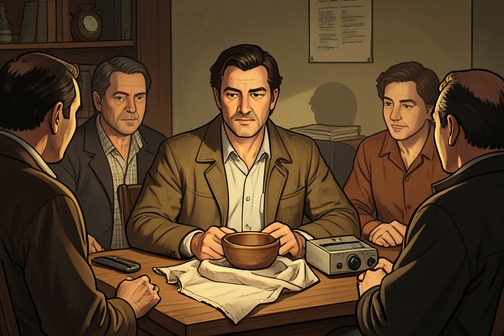
The illegal Communion at [Kärragärde](entity:location-recall-location-k-rrag-rde-b145096283aa) is the point at which [Danjel Andreasson](entity:character-recall-character-danjel-andreasson-7cad16c864f5)’s household religion becomes an open challenge to the established church. Around his table, the [Åkians](entity:character-recall-character-kians-49e6582c6c65) understand themselves as redeemed and newly cleansed through faith in Christ; outside that room, their gathering is forbidden, and Danjel faces warnings, fines, imprisonment, and ultimately the threat of exile. The episode makes the conflict more than a dispute over doctrine: it is a struggle over who may preach, where worship may occur, and whose authority governs the conscience.
## Household Faith and Its Practices
After experiencing what he understood as rebirth in the Spirit, Danjel resumed [Åke Svensson’s teachings](entity:concept-recall-concept-ke-svensson-s-teachin-0791ecc9d36a). He held Bible talks every Sunday for his household, welcoming neighbors who happened to come by, and prayed while working in the fields, barn, or elsewhere on the farm. His religious change also reshaped everyday conduct: he discarded the farm’s still, ceased making and selling spirits, stopped drinking, and gave up swearing. He treated his possessions as gifts from [God](entity:character-recall-character-god-28f937b98b12) and took in people who lacked a home, providing them food and clothing at Kärragärde.
The practice at the heart of the conflict was Communion. The dissenters gathered at Danjel’s table believing that Christ’s sacrifice had redeemed them and that they had shed their old, sinful selves. They regarded the sacrament as a covenant between Christ and the saved, to be renewed by eating the bread and drinking the wine. Though separated from the church and no longer admitted to its altar rail, they believed Christ could be present wherever they gathered. A house, barn, byre, or woodshed could therefore serve as a Communion table if the Lord was there.
## Marriage and Conscience
The religious dispute also entered Danjel and [Inga-Lena](entity:character-recall-character-inga-lena-f3e1a0ee001f)’s marriage. Danjel stopped locking the house, believing that the household had more food than God allowed it to keep; when thieves stole pork and flour from the larder, Inga-Lena could not accept his interpretation. She secretly began locking the door, feeling guilty because she believed Scripture required a wife to obey her husband. She was also distressed when Danjel left the marital bed and prayed for help, confessing that she did not understand Åke’s religion. In time she experienced her own rebirth, accepted Danjel’s spiritual judgment, and their married life resumed. The narrative thus shows religious authority not only dividing dissenters from clergy but ordering intimate life within the dissenting household.
## The Church’s Legal Challenge
The Swedish church’s authority rested on a system that protected Lutheran teaching and restricted religious innovation. The church law of 1686 directed clergy to ensure that children learned to read Scripture and be examined in the faith, while the royal Resolution and Order of January 12, 1726, sought to maintain parish order and unity in teaching. Against this institutional framework, Danjel’s preaching and unauthorized Communion were treated as violations, not simply as private expressions of belief.
When [Dean Brusander](entity:character-recall-character-dean-brusander-3d085a7b0b0d) confronted Danjel, he insisted that no one could minister without being called and ordained under church law, and ordered him to stop preaching. Danjel answered that God’s Spirit had given him authority and that the dean could not forbid his work. Brusander warned that continued preaching could bring a civil suit, a fine, or imprisonment on bread and water; a third offense could lead to two years’ exile. Danjel refused to retract his beliefs. The dean issued a first formal warning and released him, leaving the conflict unresolved but placing the dissenting ministry under the threat of escalating punishment.
## Consequences and Significance
The consequences fell on the household as well as its leader. Inga-Lena was imprisoned on bread and water for participating in the illegal Communion, while [Elin](entity:character-recall-character-elin-8ce326a51032), because she was under age, escaped punishment. Elin’s later place among the emigrants carries the episode’s effects beyond Kärragärde: she belonged to the Åkians, and her mother’s imprisonment formed part of the history she carried into the journey.
The conflict also informs how the emigrants encounter the prospect of America. When Karl Oskar seeks permission to leave, Brusander describes Danjel as having forfeited his right to live in the kingdom, contrasting the dissenting farmer with the respectable family he wishes to keep in the parish. The Communion episode therefore exposes the gap between the church’s claim to preserve Christian unity and the dissenters’ conviction that Christ’s presence is not confined to its authorized institutions. Their table becomes both a sacred space and evidence of a contested authority, while the punishment that follows helps make departure from home appear inseparable from religious as well as material hardship.
Event 10
查洛塔号遭遇北海风暴
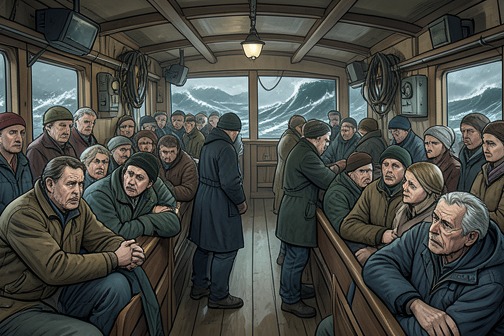
The [Charlotta](entity:object-recall-object-charlotta-f5112ad4fa04)’s first North Sea storm exposes the peril beneath the emigrants’ hopes of reaching America: a crowded ship becomes a place of helpless waiting, while [Robert](entity:character-recall-character-robert-dcc9e88f1178) experiences the sea not as a route between lands but as a force that seems to swallow him. The episode makes the risks of migration concrete, turning the ordinary facts of shipboard life—tight bunks, restricted movement, and dependence on the vessel—into conditions of mortal vulnerability.
## Causes and Conditions
The storm came during the Charlotta’s passage from [Karlshamn](entity:location-recall-location-karlshamn-4c92bb98196e) toward [New York](entity:location-recall-location-new-york-f84f7f10ee10). The brig had sailed on [April 14, 1850](entity:time-recall-time-1850-4-14-07027ae25b81), carrying 78 emigrants among a total of 94 people. Its hold had been divided into small compartments, and the passengers’ bedding, food, and belongings left scarcely any room to move. [Karl Oskar Nilsson](entity:character-recall-character-karl-oskar-nilsson-980a124ddd48) could not fit into the family compartment and shared a two-man bunk with his brother [Robert Nilsson](entity:character-recall-character-robert-nilsson-9295ccb67dcd) in the unmarried men’s section. The cramped arrangements were not incidental to the storm: below deck, the emigrants had little space to escape the motion or the fear it brought.
The immediate change came as the vessel encountered its first rough weather in the North Sea. The wind began to rise in the evening; by midnight, [Captain Lorentz](entity:character-recall-character-captain-lorentz-a17f14d6d4b1) assessed it at force nine on the Beaufort scale. The Charlotta’s topsails were reefed, and the first mate entered a single stark word in the log: “Storm.” What had been a passage across water now became an ordeal governed by wind and waves rather than by the emigrants’ plans.
## The Storm Aboard Ship
On deck, Robert saw the sea’s character change. A wave swept over the deck and soaked his trousers; the ship listed sharply, making the deck seem to tilt downhill, then rolled the other way. The first mate ordered the main hatch battened down. Robert wanted to remain on deck rather than appear afraid, but dizziness and nausea overcame him, and he went to lie in his bunk. The scene shifts from the exposed deck to the confined hold, where the storm’s force is felt without being seen.
In the dark, Robert could not move freely beneath Karl Oskar’s weight as his brother rolled across him with the ship’s motion. Around them, passengers groaned, prayed, cursed, and were sick. As the bunk seemed to sink, Robert mistook the ship’s movement for a descent beneath the sea and called to his brother that they were sinking. Karl Oskar, half-awake, answered that it was only storming and told him to keep quiet. His brief reassurance does not end the storm; it marks the distance between the physical danger outside and Robert’s terror within.
The narrative enlarges that terror beyond Robert’s private experience. Nearly a hundred people were shut inside the vessel, unable to control its course or help one another in any meaningful way. The storm is rendered as a struggle between a small ship and a vast, violent sea, while the people aboard are reduced to waiting. In the darkness, two kerosene lanterns—one green on the starboard side, one red on the port—burned on deck. Their weak light emphasizes the fragility of the world aboard the Charlotta: the ship remained afloat, but it was only a small moving refuge surrounded by water and darkness.
## Robert’s Experience and the Limits of Help
The storm’s decisive effect on Robert is not merely fear of an accident. He feels that he is taking part in death for the first time in his life. The crowded bunk, the inability to move, the sounds of others suffering, and his belief that the vessel was sinking collapse the distinction between imagining death and being caught up in its approach. The sea’s motion produces a bodily crisis, but the episode also makes him confront how little control any passenger possesses.
That helplessness extends to everyone aboard. If the Charlotta sank, the passengers could disappear without leaving a trace or a known grave; there was no practical action they could take to ensure rescue. The narrative gives this thought its own bleak force: the emigrants cannot make the storm stop, direct the ship, or secure an account of their deaths. In the face of that powerlessness, the possibility of appeal narrows to [God](entity:character-recall-character-god-28f937b98b12), even as the scene offers no assurance that human suffering will be prevented.
When Robert continues to be sick, Karl Oskar reaches him and carries him back to his bunk. He identifies Robert’s condition as seasickness, giving his terror a bodily explanation without denying the violence of the night. The storm passes without the Charlotta being lost, but the episode does not turn survival into mastery. The ship remains at sea, and the passengers have endured rather than controlled the danger.
## Shipboard Vulnerability and Narrative Significance
The storm belongs to a broader crossing defined by rules and material limits. Passengers were allotted provisions by the week, had to take turns cooking, and were told to conserve water; each person received only half a gallon of fresh water a day. The emigrants also had to clean their quarters before receiving their water. These arrangements reveal how completely their lives depended on the ship’s organization and the crew’s authority. In the storm, that dependence becomes more absolute: practical routines and allotted supplies cannot protect them from the sea.
The episode’s contrast between land and ocean also sharpens the meaning of departure. Before reaching the harbor, the emigrants had looked across water without seeing land on the other side, an unfamiliar prospect for people accustomed to seeing land around them. Once the voyage was under way, their hopes of a new home depended on continuing across that expanse. Later, contrary winds and fog stretched the passage into a succession of days, leaving the emigrants to measure distance by time and to wonder whether they had been misled about how far [North America](entity:location-recall-location-north-america-fcff35f9a912) lay. The North Sea storm is the first forceful warning that the route to a desired home can also become a place of confinement.
The storm therefore alters the emotional meaning of the emigration without ending it. The Charlotta survives the night and continues carrying its passengers, but Robert has learned that the sea can make a ship feel like a sinking bunk and a life-threatening enclosure. The emigrants’ movement toward America remains possible; their power over the conditions of that movement does not.
Event 11
神秘小鸟造访并离开查洛塔号
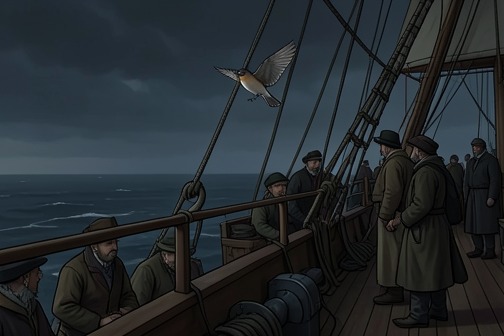
The mysterious bird’s visit and departure from the brig [Charlotta](entity:object-recall-object-charlotta-f5112ad4fa04) becomes a rare shared source of hope during the emigrants’ long Atlantic crossing. After two months at sea, when the passengers feel cut off from both the Swedish land they left and the American land they seek, the small, unidentified creature seems to bring the earth aboard with it. Its brief stay comforts the emigrants; its unexplained disappearance leaves them mourning and unsettled, with the next storm giving weight to the sailors’ fear that its departure was an ill omen.
## The bird appears amid isolation
By the time the bird is spotted on the afterdeck, the emigrants have sailed for two months. Since the English shore disappeared, they have seen only one other ship, flying the Swedish flag, and no human life beyond their own vessel. The ocean has made them feel like vagabonds forgotten by the world: perhaps someone still misses them in the country they left, they imagine, but no one waits for them in the country ahead. In that loneliness, the sudden announcement that there is a bird aboard spreads rapidly through the ship.
The passengers and crew cannot identify it. It is a small bird, scarcely larger than a wagtail, with blue-black head and tail, green back and wings, and a white throat and breast. Its appearance stands out because even the seagulls that had followed the Charlotta early in the voyage have vanished from the open ocean. With other signs of life gone, the little visitor seems to the emigrants less like an ordinary animal than a miracle, a messenger from land.
The ship’s crowded conditions make the bird’s arrival a contrast as well as a wonder. The hold is packed with bedding, food baskets, and bundles, and the passengers’ living space is divided by canvas partitions. In that confined world, the bird carries in their imagination the open places they cannot see: trees where birds nest, fields in bloom, and forests. The passengers read its earth-colored feathers as a reminder that solid land and growing life still exist beyond the sea.
## A shared companion and image of home
The emigrants respond by feeding the bird, offering bread and ship’s biscuits until it becomes choosy and no longer bothers with crumbs on the deck. It wanders among its human feeders without fear, darts away when waves wash over the deck, and sometimes flies beyond the rail before returning. Though the passengers do not know what kind of bird it is or where it came from, they make it a place among them: the Charlotta becomes its home for the days it stays aboard.
The crew shares the passengers’ concern for the visitor. A sailmaker makes it a soft nest from sewn-together pieces of wadmal, tucked behind a sail near the mainmast, where the bird takes shelter at night. During the day, people follow its movements with their eyes. This attention turns the bird into a focus of collective care across the ship’s community, and the sailors, too, are careful that it should not come to harm.
For the emigrants, watching the bird is a way of remembering that the ship is not the whole world. Its presence recalls trees, fields, and the home landscapes from which they have been separated, while also assuring them that their imprisonment aboard the vessel will not last forever. Some passengers fear that the visitor could bring harm as well as good, but they still hope to befriend the messenger from the earth and are inclined to feel that its arrival is a blessing. The creature becomes a shared sign of belonging: in their isolation, they see in it something of their own connection to land.
## Departure, mourning, and foreboding
One morning, the bird is gone. The passengers search the ship but find no trace—not a feather or other sign—and conclude that it has deserted them rather than died aboard. They do not fear for its ability to reach land, because they have come to believe it is no ordinary bird, unconstrained by weather, wind, or distance. The same uncertainty that made its arrival miraculous makes its departure impossible to explain.
The bird never returns. Its loss is felt not as the disappearance of an animal alone but as the loss of a near relative, and sorrow lasts for many days. The emigrants ask why it did not remain long enough to witness the fulfillment of the miracle and what message it meant to deliver. They cannot resolve either question. With the visitor gone, nothing aboard reminds them of the green earth as vividly as it had.
Experienced sailors, some of whom have spent thirty or forty years at sea, call the departure an evil omen. The day after the bird vanishes, another storm breaks. The narrative does not establish that the bird caused or foretold the storm, but the sequence gives the sailors’ interpretation force within the passengers’ anxious world. What had seemed a blessing is now followed by renewed danger, and the bird’s unexplained coming and going remains balanced between natural possibility and supernatural meaning.
## Narrative significance
The episode gives physical form to the emigrants’ precarious position between two homes. The bird arrives after an extended stretch in which the passengers have seen almost no life beyond their own ship; it makes land imaginatively present without bringing them any nearer to it. For a few days, a creature associated with trees and fields opens a view beyond the cramped vessel and sustains the passengers’ sense that another life awaits them.
Its departure reverses that comfort without supplying an explanation. The emigrants mourn, the sailors anticipate misfortune, and the subsequent storm intensifies the sense of threat, yet the bird’s identity and purpose remain unknown. The episode therefore holds the passengers—and the reader—between an ordinary explanation and a miraculous one. The bird is at once a living visitor on a working ship and a symbol charged by loneliness, faith, and the desire for land; its brief presence cannot settle what awaits the emigrants, but its loss makes the sea feel empty again.
Event 12
The Charlotta’s 1850 Atlantic crossing
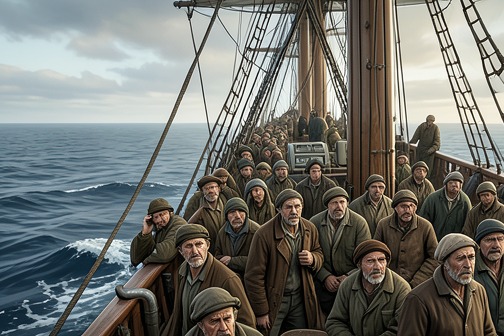
[The Charlotta’s 1850 Atlantic crossing](entity:event-recall-event-the-charlotta-s-1850-at-612d5fc69f76) is the dangerous, materially constrained passage that transforms the emigrants’ hope of a new life into an irreversible departure. A brig sailing from [Karlshamn](entity:location-recall-location-karlshamn-4c92bb98196e) to [New York](entity:location-recall-location-new-york-f84f7f10ee10), the [Charlotta](entity:object-recall-object-charlotta-f5112ad4fa04) carries people across an ocean whose scale they had never grasped at home; after ten weeks, arrival brings not instant security but precarious first steps on unfamiliar ground.
## From rumor to departure
News of fertile land across the ocean had reached communities where plots dwindled as families grew, carried neighbor to neighbor through parishes and counties. The new country remained unseen, known through pictures and rumor, while the ocean itself made departure frightening. Against the safety of familiar customs, the crossing offered possibility but demanded a practical commitment: a route, a ship, money, and a group prepared to leave together.
Spring was chosen because winter storms had passed and the emigrants could arrive early enough to till and sow for a fall harvest. [Karl Oskar Nilsson](entity:character-recall-character-karl-oskar-nilsson-980a124ddd48) and [Robert Nilsson](entity:character-recall-character-robert-nilsson-9295ccb67dcd) had written to a firm in Karlshamn and paid a hundred daler in advance for passage for six people. The Charlotta was to sail directly to New York without stopping at an intermediate harbor. When [Danjel Andreasson](entity:character-recall-character-danjel-andreasson-7cad16c864f5) decided to join, [Robert](entity:character-recall-character-robert-dcc9e88f1178) undertook to obtain a contract for his passage if there was room; Danjel’s party numbered nine, including children and household members.
The journey to the port had already gathered separate households into a shared migration. At Åkerby Junction, sixteen emigrants—nine adults and seven children—met in wagons, while three drivers were to return from Karlshamn. Danjel traveled with his wife, four children, and [Ulrika of Västergöhl](entity:character-recall-character-ulrika-of-v-sterg-h-888674962a92); [Arvid](entity:character-recall-character-arvid-4d9f6d742219) and [Elin](entity:character-recall-character-elin-8ce326a51032) rode with [Jonas Petter of Hästebäck](entity:character-recall-character-jonas-petter-of-h-s-ac5687d345da). Robert moved to [Jonas Petter](entity:character-recall-character-jonas-petter-f5942c89f0ae)’s wagon, reuniting with Arvid, his fellow farmhand from [Nybacken](entity:location-recall-location-nybacken-f89b0384187e). Their imagined clandestine escape from service had become a public journey among families and fellow emigrants.
## The ship and its rules
The brig Charlotta, commanded by [Captain Lorentz](entity:character-recall-character-captain-lorentz-a17f14d6d4b1), sailed on [April 14, 1850](entity:time-recall-time-1850-4-14-07027ae25b81). She was 124 feet long and 20 feet wide, with a capacity of 160 lasts; her fifteen-person crew carried pig iron and sundries as well as 78 emigrants, making 94 people aboard. This was her seventh voyage as an emigrant ship. The figures establish the crossing’s scale, but the passengers experienced it as a struggle for room and air.
Canvas partitions divided the hold into spaces for families, unmarried men, and unmarried women. The emigrants made up berths for 78 among bedding, food baskets, knapsacks, and bundles; the low overhead and choking air left hardly a place to step. The family space resembled a pen, and Karl Oskar, unable to fit there, shared a two-man bunk with Robert in the men’s compartment. Jonas Petter slept above them and Arvid nearby. The physical arrangement separated passengers by household status even as it pressed them into an intensely shared space.
Shipboard order governed food, water, cleanliness, and movement. Provisions were distributed by family in fixed weekly portions, to be prepared in turns in the galley; passengers could not return after a few days demanding more. Refuse and dishwater had to be thrown overboard to leeward, never windward. Each person received half a gallon of fresh water daily for drinking and washing, and passengers had to clean the hold before the water was issued. Fire was tightly regulated, lights were prohibited after ten at night, and the captain’s authority extended to punishing disobedience. These rules made survival depend not only on supplies but on coordinated labor and discipline.
## The bodily ordeal
The daily cleaning made the passengers’ dependence on scarce water immediate. Men carried buckets while women scrubbed, washed, and hung wet clothing on deck; only after the quarters were cleaned could the thirsty drink or the dirty wash. Half a gallon had to serve for cooking, drinking, and washing people and babies. When rain fell, sailors stretched a sail to collect water, and some passengers followed their example. Danjel interpreted the rain as a provision from heaven, while the practical scarcity remained unchanged.
The crossing’s discomfort was intensified by weather and confinement. The passengers spent the daytime on deck in bitter cold, wearing all the garments they had, because the air below was fetid and seasickness often came over them at night. Darkness magnified the difficulty: after lights were forbidden, a sick passenger might be unable to find a bucket in time. Morning exposed the consequences, and the emigrants began again with the work of cleaning their quarters.
Illness could become acute. When [Kristina Johansdotter](entity:character-recall-character-kristina-johansdott-8cf331686377) suffered dangerous bleeding, Captain Lorentz went to his papers and searched for his Medical Adviser for Seafarers. The handbook described how severe bleeding from the mouth or nose could weaken a patient and set out measures using cool air and sea-water packs. The scene places the captain’s responsibility within the limits of available shipboard care: medical help depended on a printed manual, the ship’s supplies, and the judgment to act.
## Distance, arrival, and significance
As the Charlotta crossed the Atlantic, contrary winds often slowed her, and the passengers felt as if the same billow lifted and tossed them again and again. After two months at sea, they looked back mentally over the immense water they had crossed and understood its magnitude in a way they could not have done at home. The ocean was no longer merely the frightening interval before a new country; it had become a distance of its own, vast enough to make return inconceivable. The emigrants came to regard the move as a passage they would make only once.
The brig sailed toward Midsummer, its prow’s eagle facing west and its masts—fir trees from the ship’s homeland—bending under gusts before rising again. The image binds vessel and passengers to the stony landscape they had left: both the pines and the emigrants endure pressure without ceasing to move forward. The ocean crossing thus becomes more than transportation. It tests bodies and convictions while severing the familiar geography of home from the uncertain promise of settlement.
On [Midsummer Eve, 1850](entity:time-recall-time-midsummer-eve-1850-c10931c5d744), after ten weeks from its home port, the Charlotta tied up at a New York pier. The passage ended, but arrival did not erase its instability. [Kristina](entity:character-recall-character-kristina-54ff8b4dbe07) walked up the steep gangplank by herself, and [Harald](entity:character-recall-character-harald-14d5314f597c) was set down to walk beside his father; Karl Oskar, stepping onto solid ground, found it seemed to roll beneath him. The emigrants had reached America, yet even the ground felt unfamiliar. Their first steps completed the voyage while opening a new and uncertain life.
Event 13
夏洛塔号抵达纽约
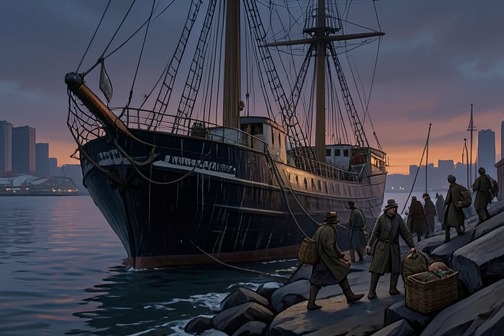
The arrival of the brig [Charlotta](entity:object-recall-object-charlotta-f5112ad4fa04) in [New York](entity:location-recall-location-new-york-f84f7f10ee10) on [Midsummer Eve, 1850](entity:time-recall-time-midsummer-eve-1850-c10931c5d744), closes the emigrants’ ten-week sea passage and opens the uncertain next stage of their lives. For the passengers, the harbor is at once a destination imagined through rumors and pictures, a return to the earth after months at sea, and a threshold crossed by weakened bodies. The relief of landfall cannot undo the voyage’s losses: of the seventy-eight emigrants who embarked at [Karlshamn](entity:location-recall-location-karlshamn-4c92bb98196e), seventy reach New York, while the first steps on American soil remain precarious.
## The voyage and its costs
The Charlotta sailed from Karlshamn on [April 14, 1850](entity:time-recall-time-1850-4-14-07027ae25b81), bound directly for New York. A brig 124 feet long and 20 feet wide, she carried pig iron and other goods as well as 78 emigrants; with her crew of fifteen, there were 94 people aboard. This was her seventh voyage as an emigrant ship. The arrival scene is therefore the culmination of a planned passage, but not an uncomplicated triumph: the ship that brings the passengers to a new continent has also been their crowded, regulated home for ten weeks.
That confinement was tangible in the hold, where canvas partitions divided passengers by family and marital status, and berths and belongings competed for space. The air was close, the overhead low, and passengers had scarcely room to move. The ship’s rules made daily survival a matter of organization: provisions were issued in weekly portions, families took turns using the galley, and each person received half a gallon of fresh water a day. Passengers had to clean their quarters before receiving water. These arrangements explain why the sight of land could affect not only the emigrants’ hopes but their bodies and spirits: the end of the passage meant release from a narrow, demanding shipboard life.
The crossing’s illnesses and deaths sharpen the contrast between arrival and loss. Two of the nineteen children aboard died during the voyage, and sickness also left other passengers weak. [Inga-Lena](entity:character-recall-character-inga-lena-f3e1a0ee001f)’s prolonged illness, with dizziness, fainting, and severe weakness, shows the bodily cost of the journey; [Kristina](entity:character-recall-character-kristina-54ff8b4dbe07) feared that she too had contracted scurvy. As the Charlotta neared New York, [Captain Lorentz](entity:character-recall-character-captain-lorentz-a17f14d6d4b1) consulted his medical guide while trying to treat Kristina’s dangerous bleeding. The arrival does not erase these dangers. It comes after a passage in which survival has remained uncertain, and it brings the emigrants to land carrying the consequences of that ordeal.
## America comes into view
The first announcement reaches [Robert](entity:character-recall-character-robert-dcc9e88f1178) at daybreak, when [Arvid](entity:character-recall-character-arvid-4d9f6d742219) wakes him with the news that America is visible. Robert hastily pulls on his trousers and emerges through the main hatch. Many passengers have already gathered on deck, standing in silence. At first, the shore is fragmentary in the mist: the passengers can tell that land rises on either side of the ship, but cannot yet judge whether it is fertile or barren, rich or poor. The knowledge that they have reached America is enough.
As the Charlotta travels up the bay, the view gradually resolves. Ships of many kinds fill the waterway, replacing the brig’s long isolation at sea with the traffic of a harbor. The mist lifts to reveal clustered roofs, rows of houses, and steeples that remind the emigrants of home. Then the harbor itself becomes recognizable as New York. The second mate, [the Finn](entity:character-recall-character-the-finn-d72feb4dd91c), tells Robert and Arvid that the island before them is [Manna-Hata](entity:location-recall-location-manna-hata-adac99838aca), and recounts what he has heard about its name and earlier history. His explanation accompanies the emigrants’ first encounter with a place they had known only through accounts of the New World.
The passengers look for something beyond buildings, piers, and roads: the green earth. They finally see trees with thick foliage and grass near the shore. That patch of living ground matters because the voyage has separated them from soil and subjected them to the ship’s confinement. Their arrival is not merely a geographical sighting; it is the moment when the land they crossed the ocean to reach becomes visible as ground on which life might begin again.
## [Land-frenzy](entity:expression-recall-expression-land-frenzy-c6569df1e695) and disembarkation
The sight of green earth brings what the narrative calls land-frenzy. The long passage has worn down the passengers’ bodies and spirits, but the view of land restores energy: the sick imagine recovery, the weak feel strength returning, and the despondent and timid regain initiative and courage. Their response is collective. Crowded together on deck, they resemble people emerging from confinement into the prospect of open ground. The transformation is emotional and physical, but it is also provisional: the passengers have reached America, not yet established homes there.
When the Charlotta anchors at the pier, the gangplank is lowered and the emigrants begin to disembark into a hot summer day. Kristina insists on walking ashore under her own strength, although her limbs are weak and she leans heavily on Karl Oskar. She does not want it said that she was unable to enter America on her own feet. [Harald](entity:character-recall-character-harald-14d5314f597c), too, is put down from his father’s arms and walks beside him. These deliberate steps make the crossing’s end a personal act as well as a collective arrival: the family enters the new land on foot, even while its members remain frail.
The scene holds hope alongside evidence of hardship. The children are pale and gaunt after the passage, and the emigrants’ clothing is worn; their chests, bundles, baskets, and boxes gather in a heap on deck. Yet [North America](entity:location-recall-location-north-america-fcff35f9a912) admits them. Kristina’s unborn fourth child remains protected within her, and the account identifies this child as the first among the Charlotta’s passengers who will gain citizenship in the North American republic. The family’s arrival thus looks forward as well as back: the parents and children have reached the shore, while a new life is already part of their passage into the country.
## Survivors and the unstable threshold
The losses are counted in two ways. Of the sixteen people who left [Ljuder Parish](entity:location-recall-location-ljuder-parish-544654807d08) and gathered at Åkerby Junction in early April, fifteen arrive in America. Of the seventy-eight passengers who embarked at Karlshamn, seventy reach land. The Charlotta has given eight passengers to the ocean. Against those numbers, Karl Oskar’s relief that his whole family is with him is particular and hard-won. He is healthy and satisfied that they have crossed safely, but the survivors’ arrival cannot be mistaken for an untouched beginning.
Karl Oskar has prepared for the road ahead by polishing his high boots, made from oak-tanned oxhide and greased until the leather shines. He believes he is well shod for travel overland, even if the American roads are poor. But at his first steps on solid ground, he becomes dizzy and stumbles: the earth seems to roll like the deck, although he had not felt this way at sea. The reversal complicates the apparent certainty of landfall. The firm ground he has longed for does not immediately feel secure; he wonders whether he must learn to walk again, as he must begin his life anew.
The ending fixes the event in time and gives its promise a deliberately unsettled shape: on Midsummer Eve, 1850, after ten weeks from their home port, the Charlotta ties up at the New York pier. The emigrants have arrived, and the green earth has renewed their hope, but the first steps remain unstable. New York is the end of the sea voyage, not the end of the journey; the land beneath their feet is firm, while their place in the new country is still to be made.